

Cooking Without a Hot Line
There is no hot line in a client’s home, and landing a protein at its peak anyway is its own discipline.

In a restaurant, the gap between the pan and the guest is taken care of by a system. A hot line keeps proteins at temperature. A pass reheats, wipes, and checks every plate before it moves. Heat lamps buy you minutes. You finish a dish and the kitchen systems carry it the last few feet before a server walks the plates.
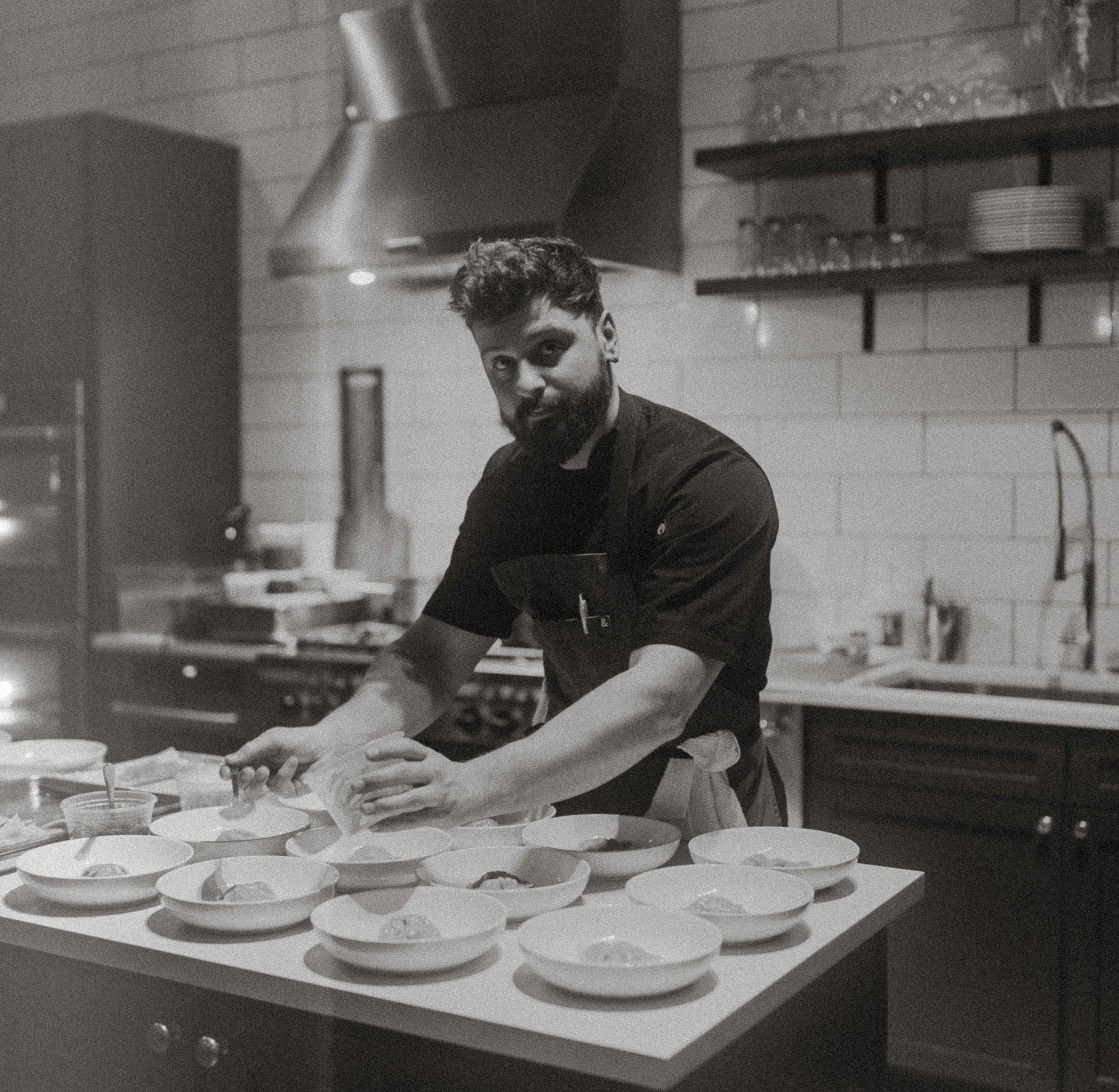
In a private home, none of that exists. The kitchen is often a room away from the table, sometimes a floor away. There is usually one oven, no holding cabinet, no salamander, no lamps. The plates come out of a cabinet that has never been warm. Or the plates are not oven safe. Whatever you send has to be right when it leaves your hands, because nothing between your hands and the guest is going to fix it.
A dish is not finished when it’s on a plate. It is finished when it reaches the guest, and in a residence that distance is yours alone to manage.
Recognize that you’re in a different environment. Every time.
The chefs I talk to who move from restaurants into private work are strong cooks. What surprises them is not the cooking. It is the amount of guests you’re plating for without heat lamps or a generally super hot kitchen. It means you need to think carefully about your plan for every component on the plate. It becomes less about food and more about operations. In an a la carte kitchen, you fire and walk the food as it’s ready. Maybe you have to coordinate with the other stations but in general, as soon as the food touches the plate, it is rushed to the guests. In a tasting menu restaurant, you are maybe plating more than one dish at a time but there are plenty of hands. In a private event space, you may not have either. You have to plan accordingly.
Build sauces that can wait.
Most usually, I choose sauces that can be ripping hot and my team stands ready to pull plates the second its sauced. A butter emulsion held too hot breaks. Held too cold it sets and goes dull. Without a warm corner of a restaurant range to park it on, you have to hold it deliberately. When writing a menu, you have to think about these things.
The best way I can think to hold a sauce would be an ISI. It doesn’t necessarily need to be a foam, but having a metal container in a sous vide water bath thats set to almost boiling is a great way to keep the sauce super hot until you need it. It is also a great way to stretch a sauce. Yes you’re paying for the labor of putting it into the ISI + cleaning it AND the C02 chargers but what does it cost you to serve cold food?
The next best way is to pre-make the sauces with a binder ahead of time. Instead of mounding in butter at the last minute, for example, I will blend cold butter into the jus before service, hit it with a touch of xanthan gum, season and place in an ISI. Not only does it not split during service, but I can get it to the right consistency every time, instead of thinking about reducing to nape on a pick-up, or having to add water to a bain marie throughout service so it doesnt get over reduced and salty etc.
I keep finishing sauces in a warm water bath rather than over direct heat, held below a simmer. This way, I don’t have to whisk anything together last minute. A beurre blanc or a beurre monté wants to stay warm, not hot, and it wants to move. A sauce that breaks on the plate is rarely a recipe problem. It is a holding problem. If you have a far walk and oven proof plates, a ripping hot plate might ruin the sauce on your way to the table. In a residence, the sauce always has to wait, so build it to wait around the conditions of the residence.
Warm plates are not optional.
A cold plate is the fastest way to lose hot food, and almost every home hands you cold plates. Bring your own plates. Do not go in blind - choosing plates for your inventory that can be heated in the oven is non-negotiable. I do not plate on cold china.
Depending on the menu, I will keep the oven at 400 so I can flash certain components of a dish along with the plates. Just a few minutes will do. Personally, I like a ripping hot plate. I know its dangerous. I know your front of house team might complain on it. It is the Alinea Group in me. IYKYK.
If I don’t need the oven to be super hot for the specific menu, then I keep plates in there the whole time at 225. If you are doing 10+ people, consider keeping at 250. By the time you’re done plating, they will be warm enough to handle.
Be a pro, have a few servillettes, napkins or towels for the team to use to carry plates. The little bit of discomfort you may experience from a hot plate is worth the food getting to your guest hot. If it is still really hot when it gets to them, tell the guest too.
Warm the plate and you extend the life of the dish across the walk to the table.
Finish in order, sauce and protein last
When you are the whole brigade, the order you finish components decides whether anything arrives hot. The things that hold get finished first. The things that fade fast get finished last. Purees, braises, and anything with mass hold temperature and can be plated a beat early. Delicate vegetables, crisp elements, and the protein go last. I plate from the most forgiving component to the least, so the thing most likely to suffer on the walk spends the least time waiting.
I have to emphasize this. It is more important to serve hot and delicious food than it is to serve pretty and cold food. I don’t care who, what, where or when.
The goal is to feed people, not your ego. Think through your pickups. Can you really have 8 components on this dish? Or can your ethos be around showing off a few ingredients and technique done well.
Rehearse the last fifteen minutes
The cook is not the hard part of a private dinner. The last fifteen minutes are. The plating, the handoff, the walk to the table, that window is where the dinner is won or lost, and it is the part the chefs I talk to rehearse the least. Before service, I walk the actual route to the table with my team multiple times. We walk in the same order for every course, drop to the same guests in our sections. I count the doors, the stairs, the distance and clock opportunities that could slow us down. I time it and my team improves it. Then I build the finish around that number. Treat the path to the table as the last station in your kitchen, because that is what it is. Sometimes we are lucky and clients are just seated at the kitchen counter!
Don’t fall prey to thinking you have it down. It doesnt matter that you and your team have worked in Michelin restaurants for decades. Pros practice the basics. Steph Curry Shoots 500 free throws in practice. Usain Bolt works out 4 hours a day to train for a 20 second sprint. You can get your team to practice service and drops before the event. Be a pro.
When writing the proposal to the client: play it safe and write a menu you know you can execute in your sleep. Once they sign the document, ask them for pictures of the dining area and kitchen. Then you can tweak the pickups based on their layout.
If this is the part of private work you are still working out, tell me in the comments where your food loses its edge between the kitchen and the table.
Are you a private chef needing more community and education about business and operations? Subscribe to our Private Dining Membership for in-depth guides on how we run Vendador. Our articles feature everything from how to price your dinners, to licensing, insurance, and finding your ideal clients.
With gratitude — Chef Francis